


What does it mean to think about education through the lens of markets, and what does that have to do with impact? EdSolutions Partner Jay Bakhru starts with a practical concern: what has to be true for a promising idea to reach the people who need it, work well for them, and keep doing so over time?
1. Start with what we want for students
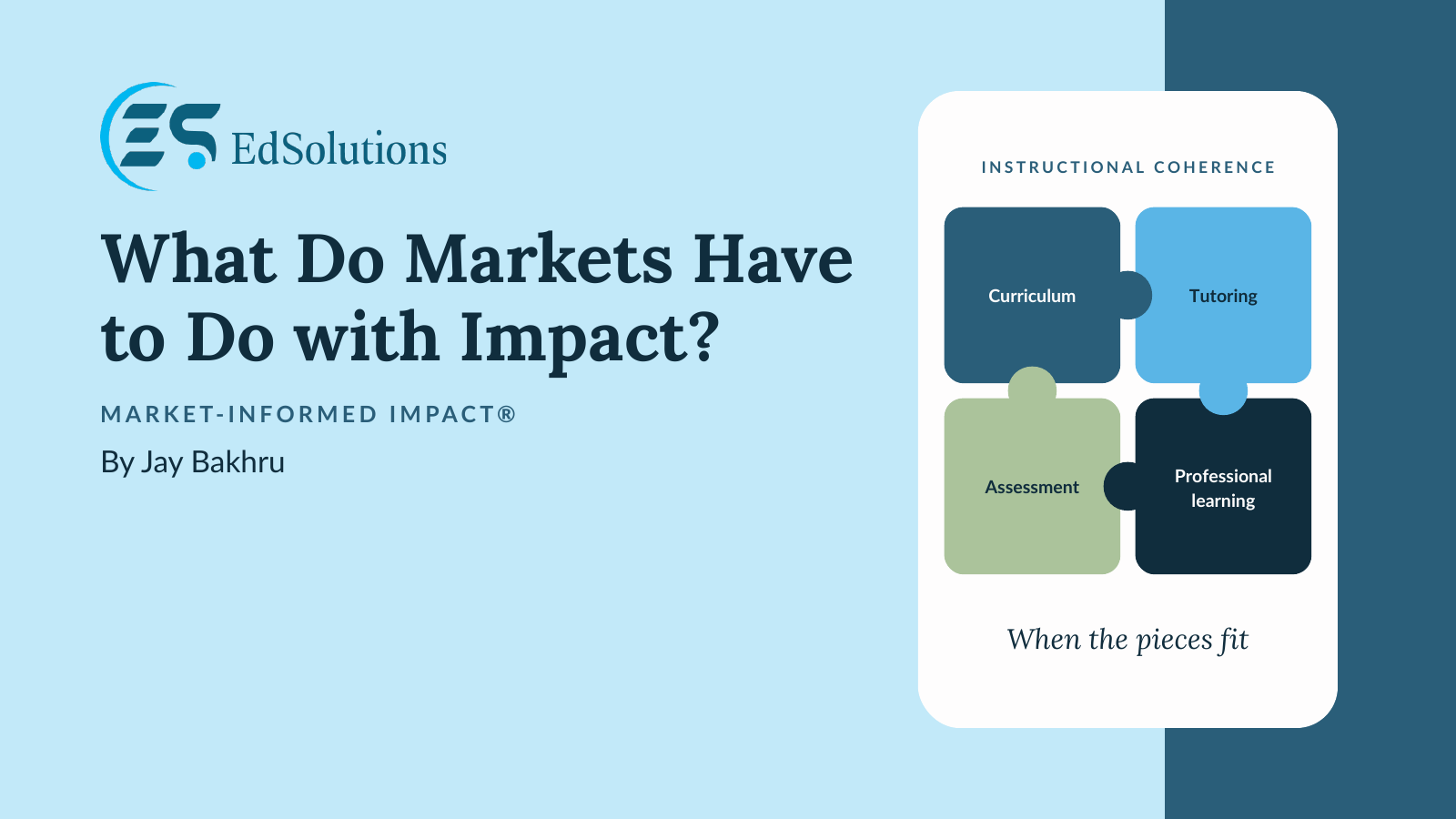
Imagine a student learning fractions whose lessons, tutoring, assessments, and teacher professional learning all fit together. That is the promise of instructional coherence. Often the pieces don’t fit, and the reasons lie in the market around the classroom: who develops solutions, who funds and chooses them, and how they are used.
2. Six stages from ambition to action
EdSolutions works through six stages: Envision, Map, Diagnose, Hypothesize, Intervene, and Learn & Adapt. Together they turn a goal into a strategy that can be tested. The diagnosis guides the intervention, and making each assumption explicit gives funders and leaders something to learn from.
3. Beyond coherence
The same questions apply to other market challenges: making high-impact tutoring affordable at scale, creating a path for innovations the market isn’t ready to adopt, helping interdependent pieces get started together, and making specialized solutions viable in small, dispersed markets.
The question for the field: what promising education idea is struggling to reach the people who need it, and what would have to change around it for that promise to become reality?
Learn more about Market-Informed Impact®.